
In this article6 sections
Key takeaways
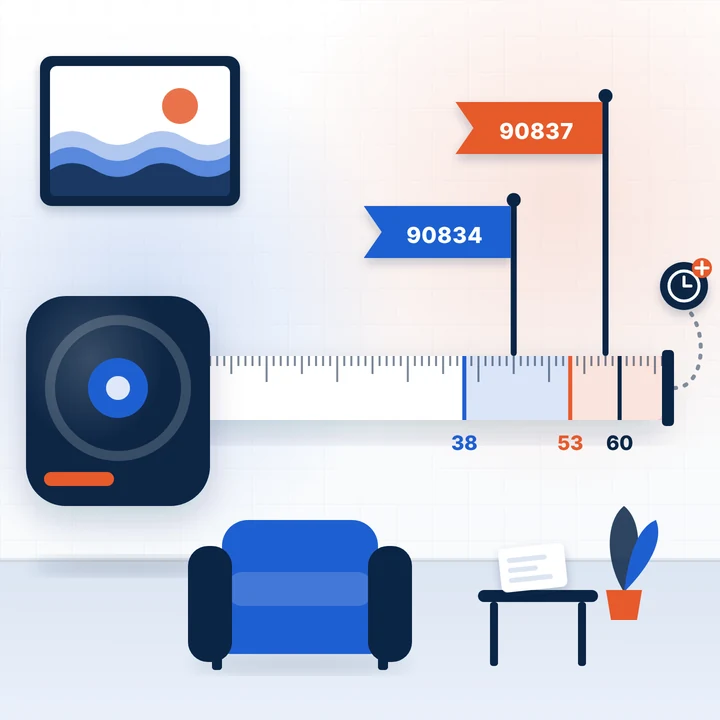
- 53 minutes is the line: 53 or more minutes of psychotherapy is 90837, and 38 to 52 minutes is 90834.
- Closest time wins: First Coast, a Medicare contractor, tells providers to pick the code that most closely matches the time spent. 53 minutes is nearer 60 than 45.
- No ceiling, no add-on: a 90-minute session is one unit of 90837. The prolonged-service codes that once stacked on top are gone.
- One unit per line: since July 1, 2022, First Coast has denied psychotherapy lines billed with more than 1 unit outside partial hospitalization.
- Missing time is the costly error: the OIG estimated $580 million of the $1 billion Medicare paid for psychotherapy in one year was improper. Undocumented time was among the causes.
CPT 90837 is called the 60-minute psychotherapy code, but the hour is only its label. The minutes in your note decide whether a session is 90837 or 90834. A calendar full of hour-long slots does not settle it.
That gap causes errors in both directions. Sessions that run 55 minutes get billed as 90834 and lose money. Sessions that end at 50 minutes get billed as 90837 and fail a review. Long sessions raise a third question, because nothing on the claim shows the extra time.
This article sets out where the line falls, what happens after the hour, and what a payer looks for in the note. It answers one question: which code does your documentation support?
The 90837 time requirement: 53 minutes or more
90837 requires 53 or more minutes of documented psychotherapy; 38 to 52 minutes is 90834. The descriptor reads “Psychotherapy, 60 minutes with patient,” yet the billable range starts seven minutes earlier.
First Coast Service Options, a Medicare Administrative Contractor, publishes both ranges in its psychotherapy guidance.
Both codes belong to the full set of mental health CPT codes. They are the pair most often confused, because one minute separates them.
The thresholds come from the CPT time rule, not from Medicare alone, so commercial plans and Medicaid generally use the same ones.
Why the line falls at 53
First Coast tells providers to select the code closest to the actual time spent. 53 minutes is nearer 60 than 45. The midpoint between the 45-minute and 60-minute codes is 52.5 minutes, and a 53-minute session is past it.
At 52 minutes the session is still closer to 45. That is why 52 is the last minute of 90834.
This is not the 8-minute rule used for timed therapy units such as physical therapy. A psychotherapy code is billed once per session, not in 15-minute units.
What counts toward the 53 minutes
Only time spent in psychotherapy with the patient counts toward the 53 minutes. Check-in, scheduling, a talk about the bill and the note written after the patient leaves do not.
Telehealth follows the same rule, whether the session ran in the office or on video.
The safest record is a pair of clock times with the total, such as “psychotherapy 2:04 PM to 3:01 PM, 57 minutes.” A note that says only “60-minute session” proves nothing about the minutes.
| Documented psychotherapy time | Code | Units | Note |
|---|---|---|---|
| Under 16 minutes | None | 0 | Below the floor for any psychotherapy code |
| 16 to 37 minutes | 90832 | 1 | |
| 38 to 52 minutes, including the 50-minute hour | 90834 | 1 | |
| 53 to 59 minutes | 90837 | 1 | Often billed as 90834 by mistake |
| 60 to 89 minutes | 90837 | 1 | |
| 90 minutes or more | 90837 | 1 | No add-on code since 2023 |
| Two separate sessions on the same day | 90837 on each line | 1 per line | Separate start and stop times for each session |
Long sessions: no upper limit and no add-on code
A session of 90 minutes or more is still one unit of 90837. Medicare has no add-on code for psychotherapy time past the hour, and 90837 itself has no upper limit.
Before 2023
For years, a long session could carry an add-on. Prolonged-service code 99354 could be billed with 90837 once a session reached 90 minutes, and 99355 covered each further 30 minutes. That is where the “53 to 89 minutes” range still quoted for 90837 comes from. 89 was the last minute before the add-on started.
Since January 1, 2023
99354 and 99355 were deleted from the CPT code set, and their replacements do not reach psychotherapy. First Coast states that G2212, Medicare’s prolonged-service code, can be used only with evaluation and management codes. It cannot be added to 90837 or 90847. A 75-minute or 120-minute session therefore pays the same as a 53-minute one.
Clinicians who run 90-minute trauma protocols can keep doing so. The claim carries one 90837, and the note should still record the full 90 minutes. That record shows a reviewer why the session ran long.
One unit per line
A long session cannot be split into two units either. Since July 1, 2022, First Coast has denied psychotherapy lines billed with more than 1 unit, except in partial hospitalization (place of service 52). Check whether your own Medicare contractor applies the same edit.
Two separate sessions on one day are a different case. Each goes on its own claim line with its own start and stop times.
Commercial and Medicaid plans can set their own limits on long or repeated sessions. Check the plan’s behavioral health policy before a standing 90-minute slot goes on the calendar.
If long sessions and their paperwork are eating into clinical time, read whether outsourcing medical billing is a good idea.
The time rule
The minutes in the note pick the code
Psychotherapy is coded by documented minutes with the patient, once per session.
Individual psychotherapy, documented minutes
The line sits past 52.5 minutes, the midpoint between the 45-minute and 60-minute codes.
No add-on past the hour since 2023Note time after the session does not count
90837 or 90834: let the note choose the code
Documented minutes choose the code; the calendar slot, the session’s difficulty and habit do not. An intense session that ends at 48 minutes is 90834. A quiet one that runs 56 minutes is 90837.
Watch for five common errors in this pair:
- Billing the calendar slot. A 60-minute appointment often holds less than 53 minutes of psychotherapy once a late start and the wrap-up come out. Bill the minutes in the note.
- Billing the 50-minute hour as 90837. The traditional 50-minute therapy hour falls in the 90834 range of 38 to 52 minutes.
- Counting note time. Minutes spent writing after the patient leaves do not count toward the 53.
- Rounding down to be safe. A session of 53 to 59 minutes billed as 90834 is undercoded. The note supports 90837, and the difference is lost on every such session.
- Writing the same times on every note. Notes that read 2:00 to 2:53 week after week look copied, not recorded. Real sessions vary by a few minutes, and the note should show it.
Prescribers who also bill an evaluation and management visit that day report the therapy as add-on 90838, not 90837. The rules for that pairing are covered in psychotherapy add-on codes billed with an E/M visit.
The two codes pay differently. In 2026, the Medicare national non-facility rate for 90837 is about $53 higher than for 90834.
What payers check on a 90837 claim
Payers check that the note shows 53 or more minutes of psychotherapy and a reason for the longer session. Three checks come up again and again:
- Documented time. First Coast names missing time documentation as an area of concern in Medicare’s error-rate (CERT) data. The Office of Inspector General estimated that $580 million of Medicare’s $1 billion in psychotherapy payments in the year from March 2020 was improper. Missing documentation, including session times, was among the causes.
- A reason for the longer session. The extra time should serve the diagnosis and the treatment plan. First Coast points providers to LCD L33252 for the documentation it expects. A stock phrase copied into every note does not show why this patient needed the hour.
- The billing pattern. Payers compare how often a clinician bills 90837 with how often peers do. A share far above the norm can prompt a records request even when each note is sound. How payers choose practices for review is covered in what triggers a payer audit.
A note that holds up under review usually shows six things:
- Start and stop times, with the total minutes of psychotherapy
- The diagnosis being treated in this session
- The interventions used, named specifically
- The patient’s response and progress
- Why this session needed the full hour
- A signature and credentials that match the rendering provider on the claim
Some downcoding never arrives as a denial. A 90837 line paid at the 90834 rate shows up only in the remittance, so compare paid amounts with the contract each month. When a payer denies or downcodes a 90837 line, Northgate Billing works the denial and files the appeal from inside the practice’s own software.
Prior-authorization rules for 90837 vary by plan; UnitedHealthcare, for example, told Rocky Mountain Health Plans providers that 90837 sessions need none.
Conclusion: billing the full hour
The full hour is billable from 53 minutes, and nothing past the hour adds to the claim. If sessions end at 50 minutes, 90834 is the right code. A new biller will not change that; only a longer session would. Before any mental health and behavioral health billing claim goes out, someone should check the minutes against the code. Standard medical billing services bill the code the provider assigns.
Handling those claims takes legal footing too. Northgate Billing signs a Business Associate Agreement under 45 CFR 164.504(e) before it touches a single record. The harder question is whether the billing should stay in-house at all.
Frequently asked questions
How many minutes is a 90837 session?
A 90837 session is 53 minutes or more of psychotherapy with the patient. The code is labeled 60 minutes, but 53 minutes is closer to 60 than to 45. Medicare contractor First Coast tells providers to bill the code closest to the time spent. From 38 to 52 minutes the session is 90834, and past 60 minutes it is still one unit of 90837.
What does CPT code 90837 mean?
CPT code 90837 means individual psychotherapy, 60 minutes with the patient. It is the longest of the three standalone psychotherapy codes, after 90832 and 90834. It covers any session of 53 minutes or more, with no upper limit and no add-on for extra time. The minutes in the note, not the appointment length, decide whether a session qualifies.
Can 90837 be billed alone?
Yes. 90837 is a standalone code, so it can be the only service on the claim. If a prescriber also bills an evaluation and management visit that day, the psychotherapy is reported with add-on code 90838 instead. Either way, the 60-minute code needs at least 53 documented minutes of psychotherapy.
Can 90837 be billed as telehealth?
Yes. 90837 can be billed for telehealth psychotherapy, and the same 53-minute rule applies. What changes is the claim detail, because place-of-service and modifier rules for telehealth differ by payer and have changed several times. The documented minutes still choose between 90834 and 90837.
Can you bill two 90837 on the same day?
Only for two separate sessions. Each goes on its own claim line with one unit and its own start and stop times. One long session cannot become two 90837 lines, however long it runs. Medicare allows up to 2 per patient per day, and commercial or Medicaid plans may allow fewer.
Can I bill 2 units of 90837?
No, not for one session. Since July 1, 2022, Medicare contractor First Coast has denied psychotherapy lines billed with more than 1 unit, except in partial hospitalization. A 90-minute or 2-hour session is one unit of 90837, because no add-on code covers the extra time.
Can a family member be in the room for a 90837 session?
Yes. Medicare contractor First Coast treats 90832 to 90838 as including family members who join as informants. The session must stay focused on the patient. When it turns to the relationships themselves, family psychotherapy codes such as 90847 apply instead. For 90837, only the minutes of the patient’s psychotherapy count toward the 53.
Should your practice keep billing in-house?
When outsourcing medical billing pays off, and when an in-house biller is the better choice.
Read the guide
Written by
Orvella Denvik
Senior Account Lead, Northgate Billing
This article is general billing information, not legal or coding advice for a specific claim. Check the current CPT manual, your Medicare Administrative Contractor and each payer’s policy before billing.